
The HiLASE Centre is embarking on a bold expansion into space-borne laser innovation with the ATLAS project – Advanced Technologies for Laser Applications in Space. Officially kicked off on 1 February 2025 under the European Research Executive Agency (REA), ATLAS marks Czechia’s leap to the forefront of space sustainability research.

Sustainability from space

Sustainability in Space

Sustainablity of the space sector
ATLAS Project Objectives
The goal of the ATLAS project is to strengthen the HiLASE Center’s position at the forefront of laser technology development for space applications. The project focuses on building a strong research foundation, developing groundbreaking laser solutions, and transforming HiLASE into a center of excellence that bridges science, innovation, and industry.
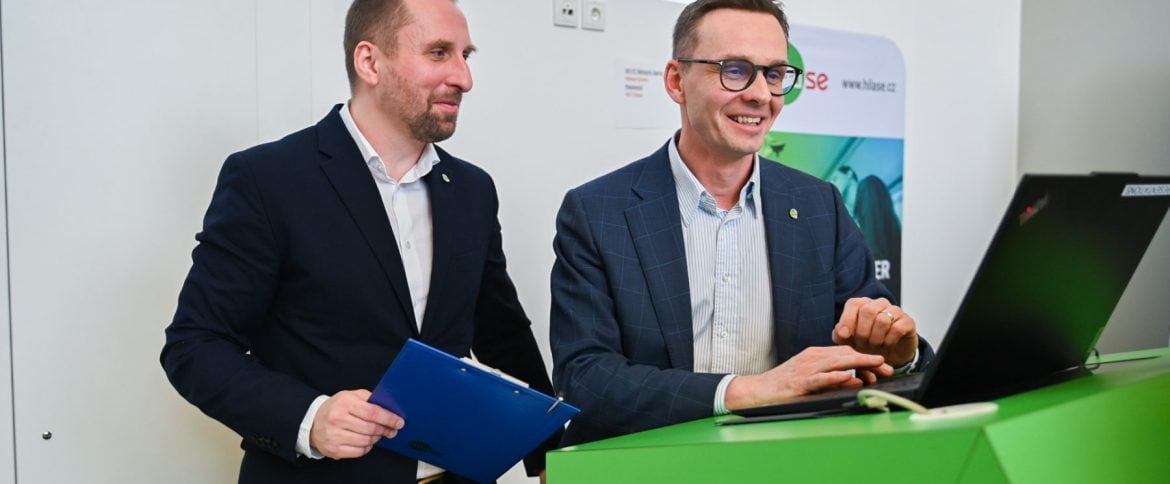
1. Building the ERA Chair Research Group
The first goal is to establish and integrate a world-class research group led by the ERA Chair, Prof. Massimiliano Vasile. Together, they will design and implement a comprehensive Research and Application Strategy, focusing on special laser systems and components for space sustainability. This includes feasibility assessments, roadmap planning, and the development of space-ready lasers emphasizing miniaturisation, resilience, and durability.
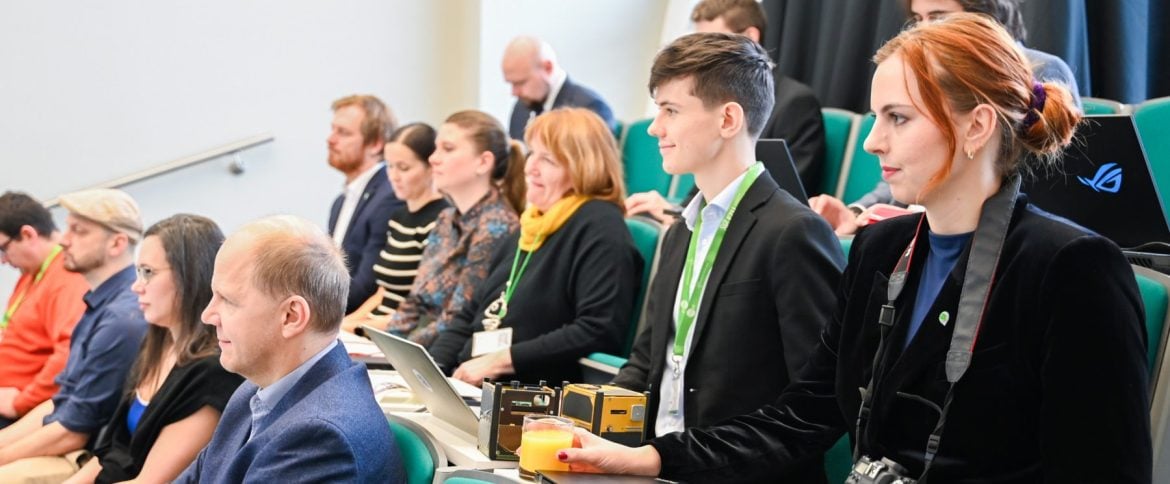
2. Transforming the Research Environment
ATLAS will transform the research, innovation, and training ecosystem at the HiLASE Centre to boost its competitiveness and visibility. The project will introduce high-quality training programmes for postdoctoral fellows and early-career researchers, including lectures and workshops aimed at developing both scientific and transversal skills.
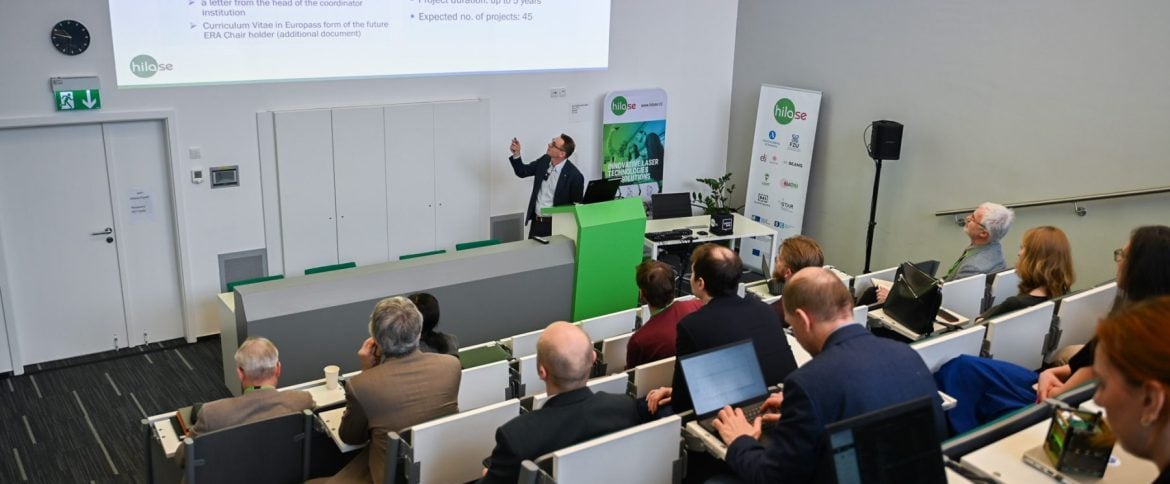
3. Advancing Laser Technologies for Space
ATLAS will increase the scientific excellence of HiLASE in the field of laser technologies for space applications. The research will explore new laser-based approaches for communication, sensing, navigation, surface prospection, space traffic management, and laser propulsion. These activities will be carried out through focused work packages, including feasibility studies dedicated to pioneering applications.
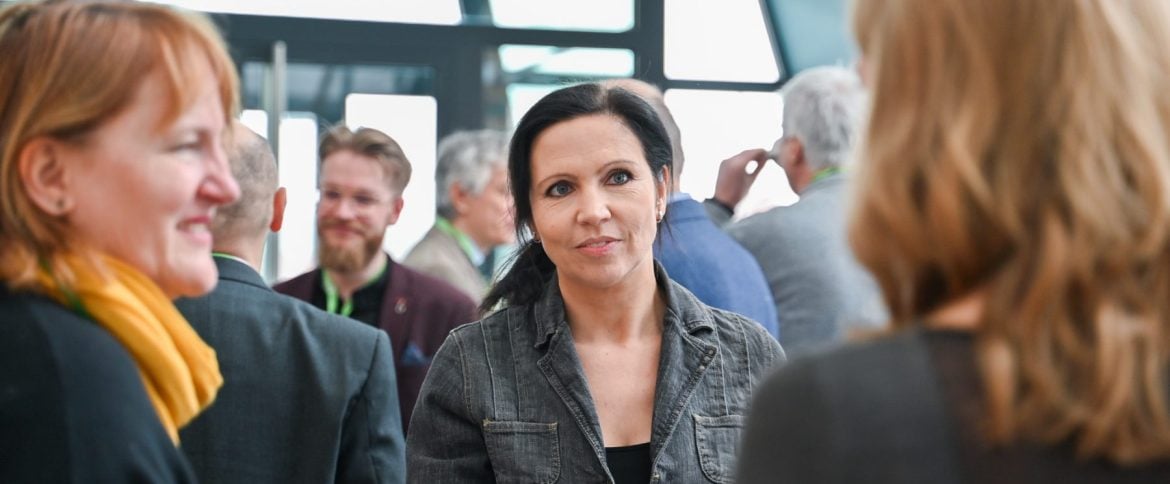
4. Strengthening Visibility and Collaboration
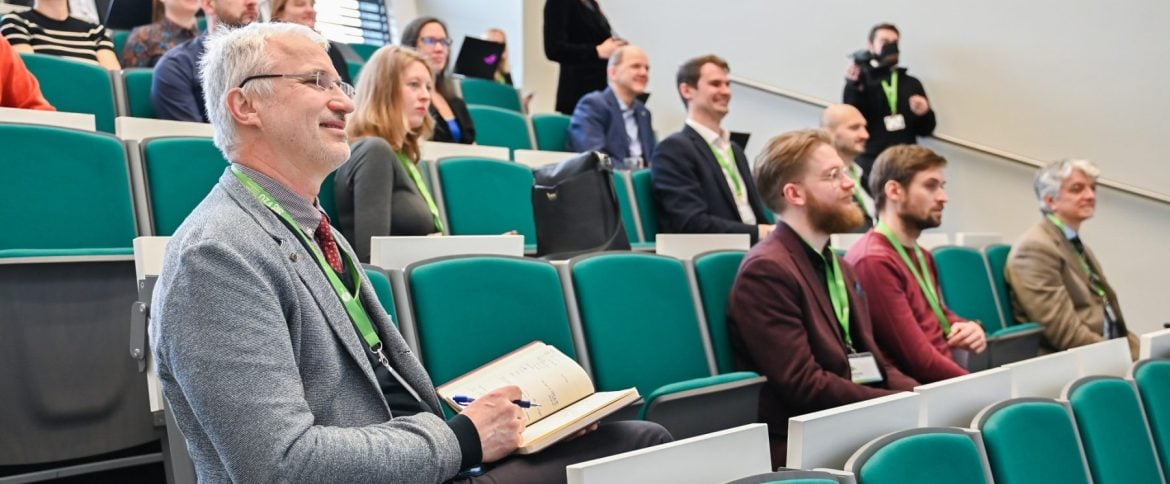
Another key objective is to enhance the national and international visibility of space-borne laser research at HiLASE. Through international projects, networking events, summer schools, and industry-focused workshops, ATLAS will build bridges between researchers, innovators, and the public. A special emphasis is placed on industrial collaboration to accelerate the transfer of research results into practical innovations.
5. Ensuring Long-Term Sustainability
Last but not least, ATLAS aims to secure the long-term sustainability of its research programme by increasing international funding, strengthening industry partnerships, and supporting business development. Researchers and grant office staff will gain new project-development and commercialization skills, ensuring that HiLASE remains a key European player in laser-based space technologies.
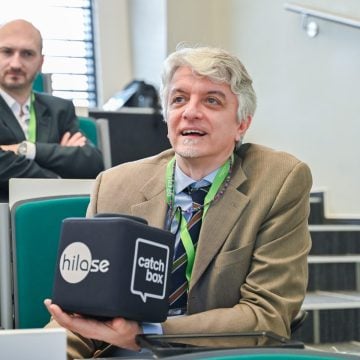
ATLAS is positioned at the intersection of laser science and space systems engineering. Led by ERA Chair Professor Massimiliano Vasile, the project aims to establish a world-class research programme at the HiLASE Centre, cultivating new capabilities in Central Europe.
Prof. Massimiliano Vasile is a Professor of Space Systems Engineering and Director of the Aerospace Centre at the University of Strathclyde, Glasgow. With over 25 years of experience in space systems, he is a leading expert in planetary defence, space safety, and sustainable space environment management.
Prof. Vasile has pioneered the use of spaceborne lasers for planetary protection and has led several high-impact European initiatives, including three Marie Skłodowska-Curie European Training Networks under FP7 and Horizon 2020. He has successfully coordinated 20 projects funded by major organizations such as the European Space Agency, UK Space Agency, and DSTL, securing more than €17 million in research funding.
A Fellow of the Royal Astronomical Society, Associate Fellow of AIAA, and Senior Member of IEEE, Prof. Vasile has authored over 120 journal papers and 270 conference papers. His research impact places him among the top 2% of scientists worldwide.
Through his extensive network of collaborations with industry leaders (Airbus, Thales, OHB, GMV, Deimos) and research institutes (Fraunhofer, CNES, DLR, INRIA), he drives innovation at the intersection of laser technology, space safety, and sustainability.
ERA Chair
Milestones & Strategic Impact
ERA Chair appointed
Professor Massimiliano Vasile was appointed as the ATLAS ERA Chair and leader of the Space Laser Technologies group. He provides scientific leadership to the team and supports the strategic development of space-related research at HiLASE.
Professor Massimiliano Vasile appointed as strategic advisor
Professor Massimiliano Vasile was appointed as Advisor to the Head of the HiLASE Centre and Advisor for the Space Area of FZU, strengthening the integration of space-related research into the institution’s strategic development.
Long-term strategy adopted
The HiLASE Centre adopted its Long-term Development Strategy for 2026–2035. The strategy strengthens the Centre’s transformation into an internationally recognised research and technology organisation and identifies space-borne laser technologies as a key development area.
Space research strategy launched
The Research and Development Strategy for the Space Pillar was completed. It defines HiLASE’s research priorities in optical tracking, space communication, orbital debris mitigation, power beaming, and in-space manufacturing and recycling.
ATLAS communication activities launched
The project’s communication, dissemination and exploitation framework was launched. It defines the key target audiences, communication channels and activities supporting the visibility of ATLAS and HiLASE within the European laser and space communities.
With ATLAS, HiLASE is pushing lasers beyond Earth, ensuring the Czech Republic becomes a leading innovator in sustainable space technologies.
Funded by the European Union. Views and opinions expressed are however those of the author(s) only and do not necessarily reflect those of the European Union or European Research Executive Agency. Neither the European Union nor the granting authority can be held responsible for them.